I find myself especially drawn to art works that explore the surreal. Not necessarily art that falls within the Surrealist movement, but art that looks at or lets you have an experience rooted in the surreal. Often times, these works also deal with the sublime, a merger of fear and beauty that leaves you feeling less in control, but captivated in awe.
Three museum visits we have taken have capitalized upon this way of thinking and feeling when taking in a particular work of art. Although these specific pieces are not a part of the Surrealist movement by definition, for me they work more successfully to provide this experience, one that is especially important in the present day.
The first and oldest is Hieronymus Bosch. This Netherlandish master who worked in the late 15th to early 16th century has consistently been one of my favorite artists. Known for his nightmarish depictions of hell and detailed religious scenes full of symbolism, Bosch is often viewed as a predecessor to the Surrealists (see attached article), with much inspiration for the Surrealist movement cited in his often-strange works.
While at the Gallerie dell’Accademia in Venice, we had the opportunity to see three of Bosch’s recently restored altarpieces. I was specifically drawn to the Hermit Saints Triptych. Painted in the late 1400’s, this triptych shows St. Jerome, St. Anthony and St. Giles.
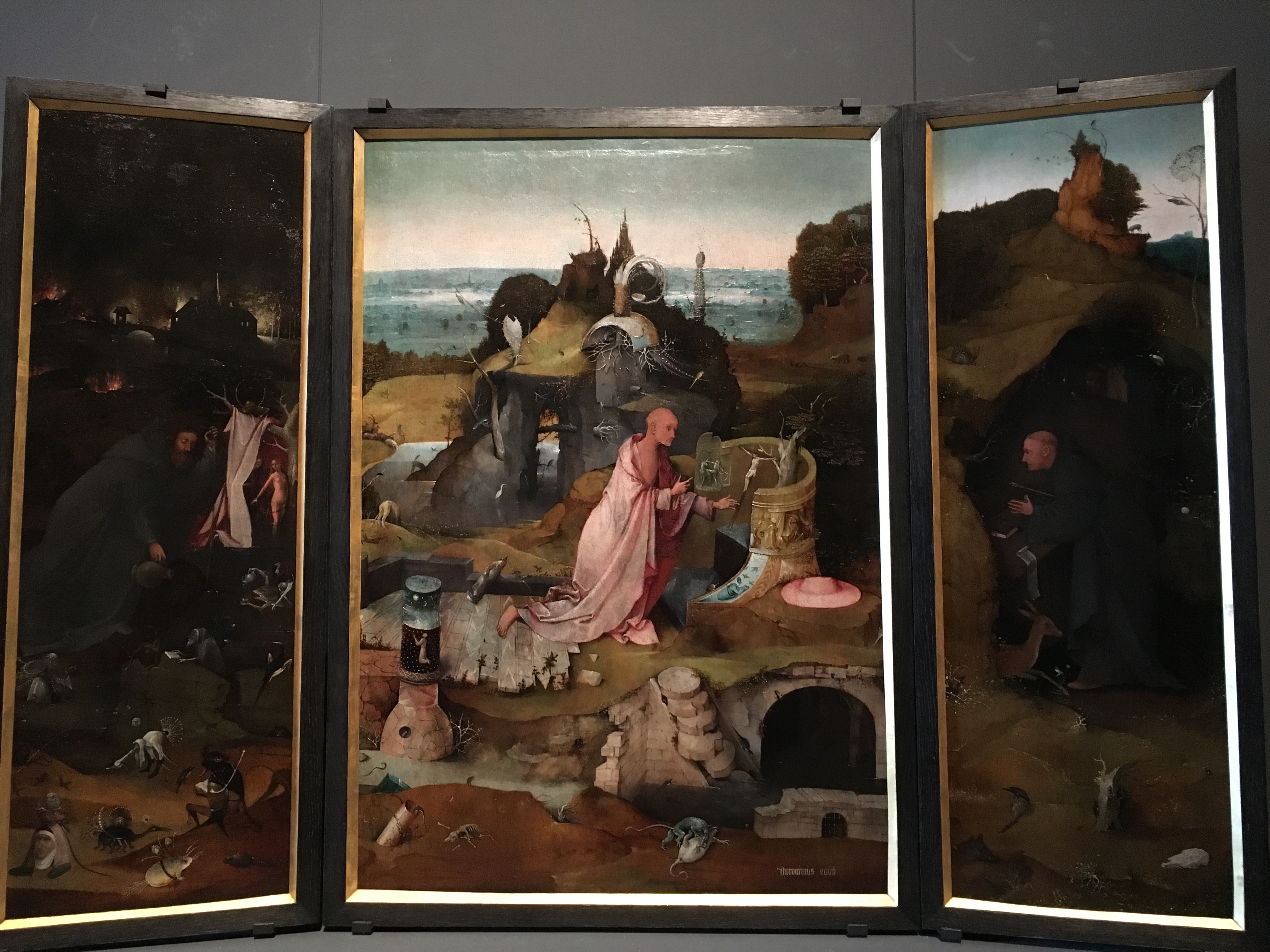
Having a triptych of saints seems like nothing special or out of the norm for the time, but once you really begin to look, you realize that Bosch’s piece is nothing like the ordinary.
This is because Bosch dots his landscapes with small and weird looking beings, strange figures that captivated me entirely. Unrecognizable animals and humans are welded together to form absurd beings with fans for butts or feet as ears. It is like nothing I’ve ever seen.
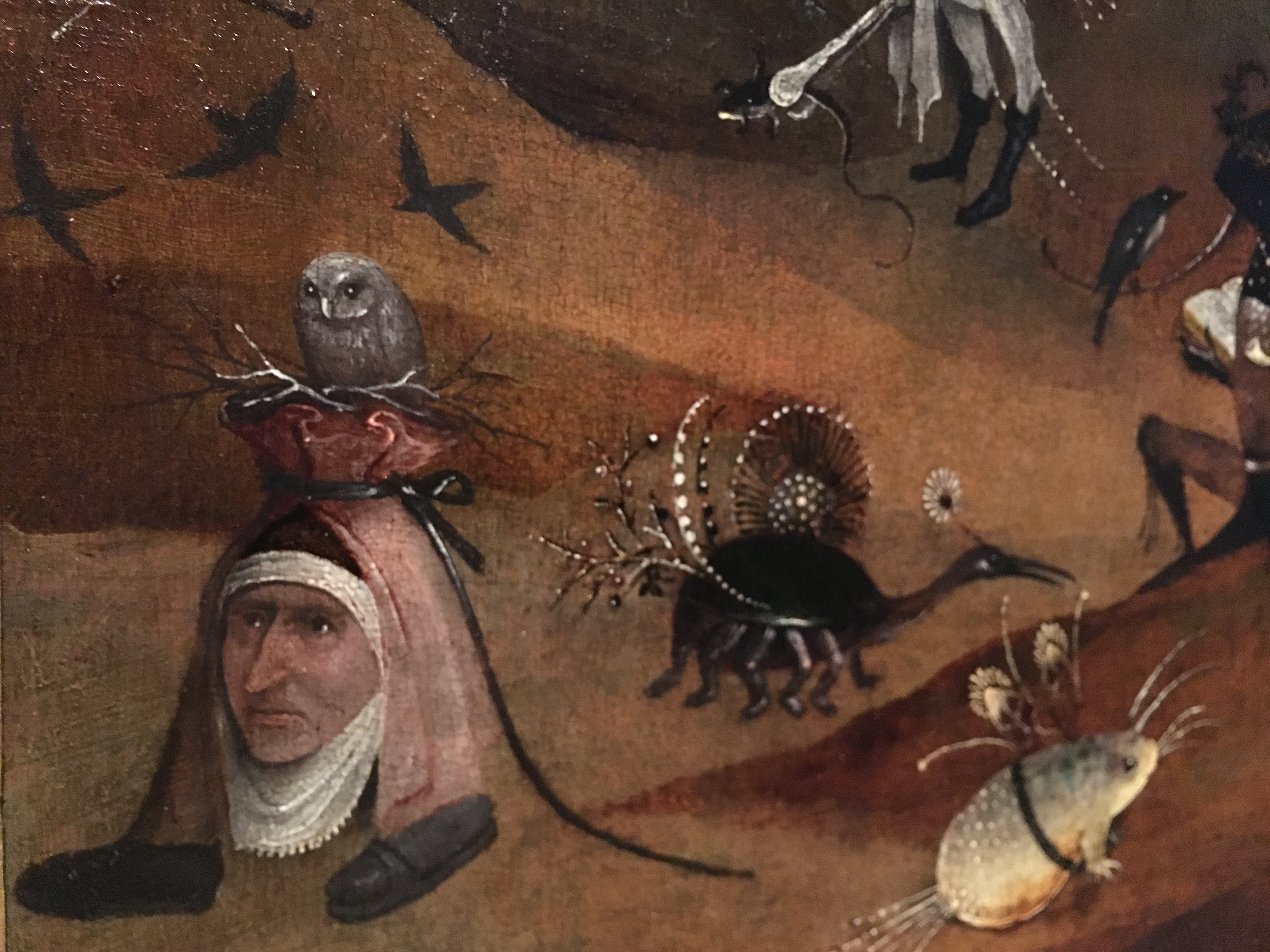
With a trip focused on contemporary art, this piece surprisingly moved me in an unexpected way. This was my first time seeing a Bosch in person and his detail of purely imaginative figures blew me away. I stood in front of this triptych for an hour, attempting to take in every little detail. Due to the crazy nature of these fictitious creatures, it was hard to soak in all of the zany content of the canvas, but seeing this work in person made a hugely significant difference for beginning to understand what was going on in Bosch’s head.
Art has changed immensely since Bosch’s religiously inspired canvases, but connections are still evident between Bosch and his influence into the modern day, specifically in the way that he makes you think about the usual through the context of the unusual. His strange figures populate a traditional looking set of panels, bringing the ordinary and extraordinary together in a space we call the surreal.
This idea of the unusual in a usual space is exemplified by another artist, one working over 500 years later, Tomás Saraceno. This Argentinian born artist has a massive work on view at the K21 Ständehaus in Düsseldorf.
Unlike any work of art I’ve ever seen, Saraceno utilizes the 80-foot high ceiling of K21 as his installation site. To enter in orbit, you must put on a jumpsuit, change into a pair of climbing shoes, and sign a waiver. This is just the beginning of putting your life in the artist’s hands.
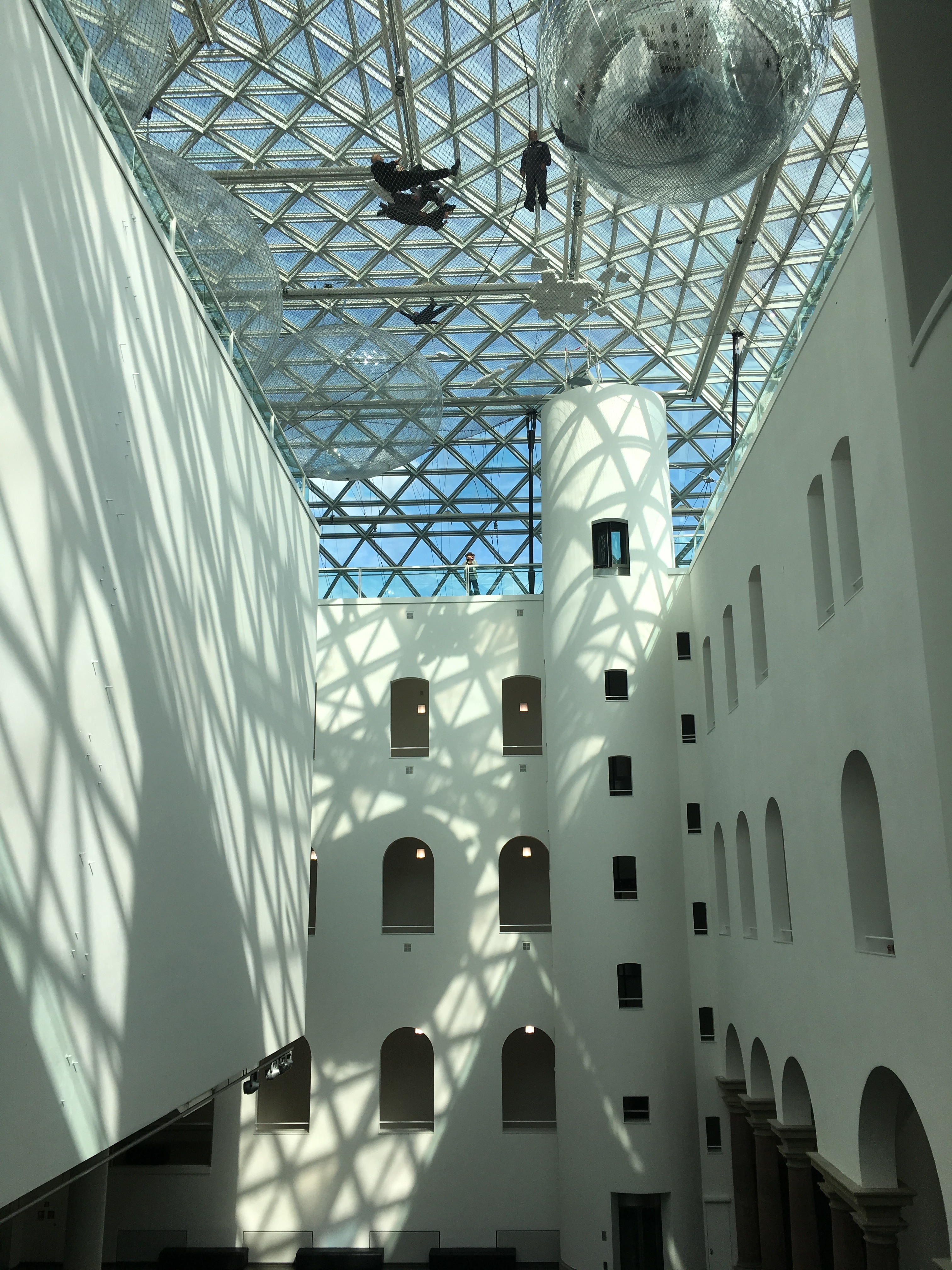
in orbit consists of three levels of steel mesh, strewn across the ceiling like a spider web. (Much of Saraceno’s inspiration in structure, beauty, and strength comes from spiders.) Five mirrored spheres dot this hanging space, mimicking clouds. The totally surreal landscape, existing 80 feet off the ground can be entered by museumgoers, and of course as someone who loves heights and adventures, this was something I had to do.
There is a sense of motion accompanied with entry to this space, very intentionally on the artist’s part. The webs shift and move with weight, and the shape of the space changes ever so slightly with each step. Because of this, there is a relationship you feel with the people you are moving around with. That sense of community was very evident in the ten minutes we had allotted up in the sky. There is also a sense of weightlessness, both floating and falling, similar to being in space, terrifying for some, and comforting for others, eliciting feelings of the sublime.
Although I’ve done high ropes courses before, this experience, of being in a museum, a place usually associated with hushed voices and still bodies is transformed into a surreal utopia. Looking down and seeing nothing but a net between your feet and a museum lobby, further heightened this absurdity for me, once again, putting an unusual experience in a usual setting. Experiencing this first hand was not only immensely thrilling, but also very thought provoking.
Saraceno views in orbit as a network of relationships, a new geographic form of a utopian dream. Linking art and science, Saraceno explains in the wall didactic that the piece seeks to respond to ecological crises of our modern Earth, and the shift towards an uninhabitable planet. This utopic sphere removes the viewer from our current place of being, envisioning a new realm of dwelling to make the experiencer really think about what a utopic world like this could be.
Another one of my favorite artists who was also represented in K21is James Turrell. It is hard to describe Turrell’s work without seeing it, as it is an experience impossible to capture in a photo or video, but that is one of my favorite things about it.
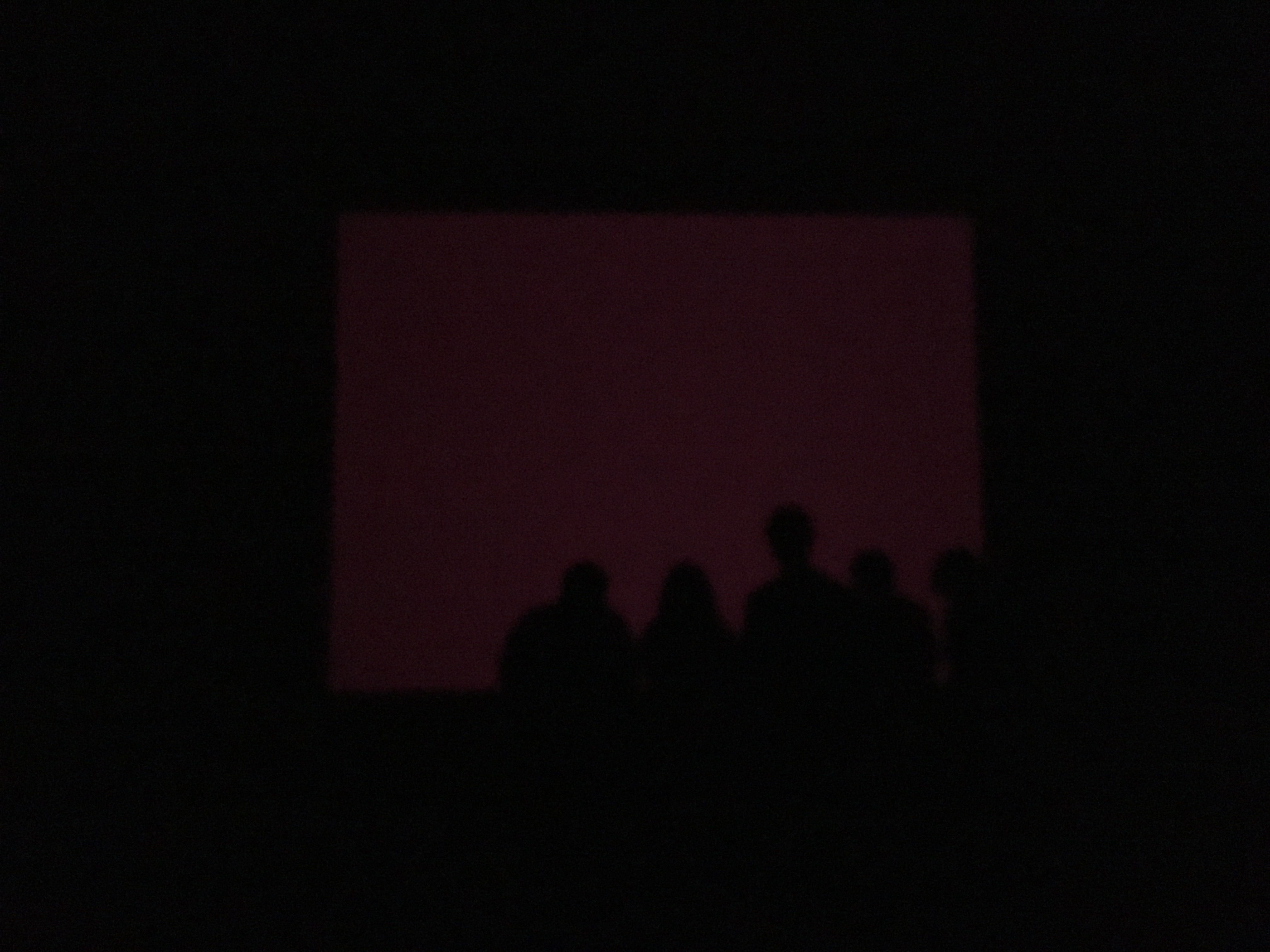
Grey Dawn is a completely dark room, except for what appears to be a dim pink screen covering most of the far wall of the space. As your eyes adjust to the darkness (the didactic recommending 5-10 minutes), and you move closer, you reach a point where you realize, the ‘screen’ is not a screen, but a square hole in the wall, leaving a void with no conception of depth of the newly discovered space, with dim pink lights on the inner part of the wall.
The moment when you go from thinking the piece is a screen to awing over the new space you can physically reach into is that moment, again, where the usual becomes unusual, and you can feel the sublime being transformed from fear to beauty.
Turell creates a surreal environment for us all, one where you question your own reality, simply through the manipulation of lights and space. This surreal experience, quite different from Bosch’s and Saraceno’s, still explores this same theme and gives the viewer a new way of thinking about a traditionally ‘normal’ space.
Historical Surrealists aimed to defy artistic norms with their avant-garde movement, critiquing the bourgeois and the political situation of Europe in the 1930’s. Although no neo-surrealist movement is arising in the modern day, I would argue that looking to works that provide a surreal experience (including Bosch, Saraceno, and Turell) is important in our day and age. These experiences, forming the unusual out of the usual, help us think critically about what is usual for us. Understanding what is not reality helps you glean more out of reality. Whether it’s hanging 80 feet above a museum or seeing fantastical creatures amidst a standard looking scene, taking a break from the real to look at the surreal always gives a different perspective, one that can help us to rethink the way we live and respond to our modern world.
Additional information/sources:
http://www.bbc.com/culture/story/20160219-the-ultimate-images-of-hell
http://www.archdaily.com/394622/in-orbit-installation-tomas-saraceno