https://goo.gl/images/Tse15x
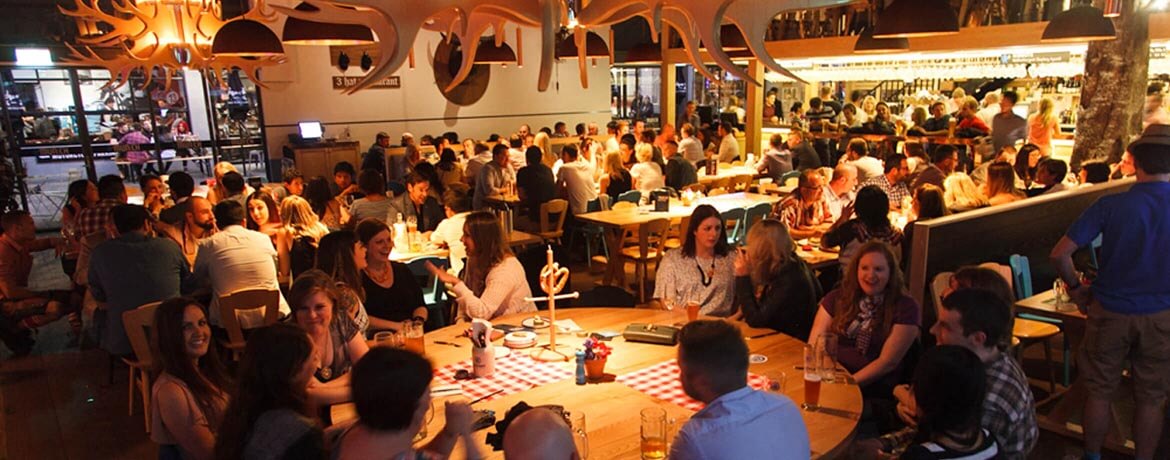
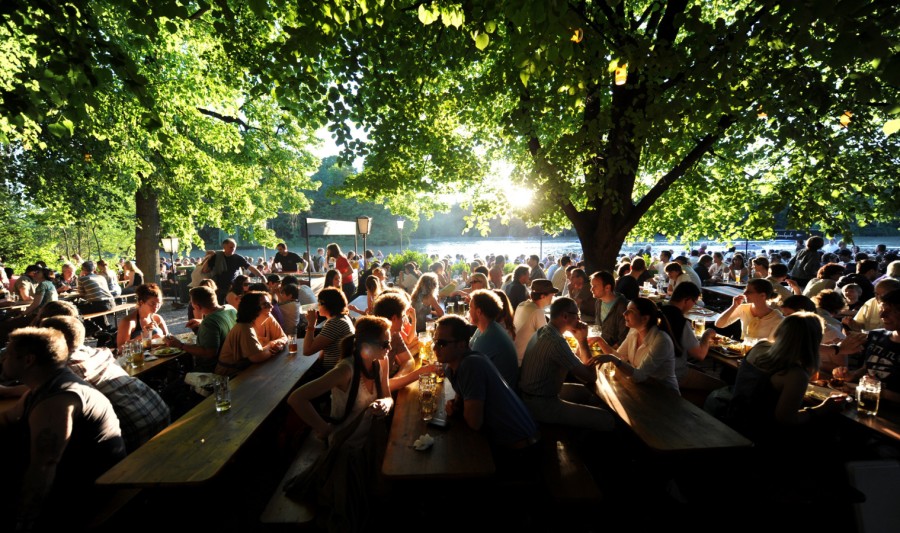
In Germany, you share space. At the brauhaus, at the café, at the library, at the biergarten, you sit communally, next to people you do not know and people you do. Before arriving in Germany, I was told that communal seating is very common, but I had only really expected it in the context of restaurants and cafés. I was then surprised to find that this notion of shared seating exists in other arenas of German society as well. In fact, it is prominent in many public spaces in the country. For this reason, “Ist hier noch frei?” or “Is this spot free?” is by far the most useful German phrase I have learned (thanks to Julia!).
https://goo.gl/images/TrQs77
The day I realized the extent to which shared space pervades German society was when I went to the University of Cologne’s library in search of an academic environment that would force me into a productive mindset. I wanted to sit at a small, private desk so that I could really focus, just as I would do at Carleton if I was feeling swamped with work. At Carleton, I have become accustomed to studying being an independent activity. The lower floors of the Gould Library are filled with small tables and cubbies, perfect for individual work. Even the fourth floor, which is catered towards group work, is composed of separated tables that seat no more than six people. Sitting in a free seat at a table already occupied by a stranger would be seen as out of line. Once an empty table is claimed, strangers are not invited.
Having approached studying in this manner for the past two years, the University of Cologne’s library shocked me. Following a stream of students up the library’s main staircase, I managed to find my way to the main study area. I was greeted with endless rows of desks, joined together in long strings. They were packed with students seated almost shoulder to shoulder, working away. It felt like an examination room. I was thoroughly overwhelmed by this area, so I went in search of the private desk that I had originally gone there to find. I walked around the library for a good 15 minutes, and could not find a single spot. There were a few standalone desks tucked away in hard-to-find corners, but they were all occupied. In the end, too scared to squeeze myself between two students at one of the long communal tables, I opted instead to sit on the floor in one of the main hallways (to be fair, there were other students doing the same thing because the library was so crowded that day). After a few hours of work, I left the library feeling disappointed. I was upset that I could not adapt to this foreign manner of sharing space.
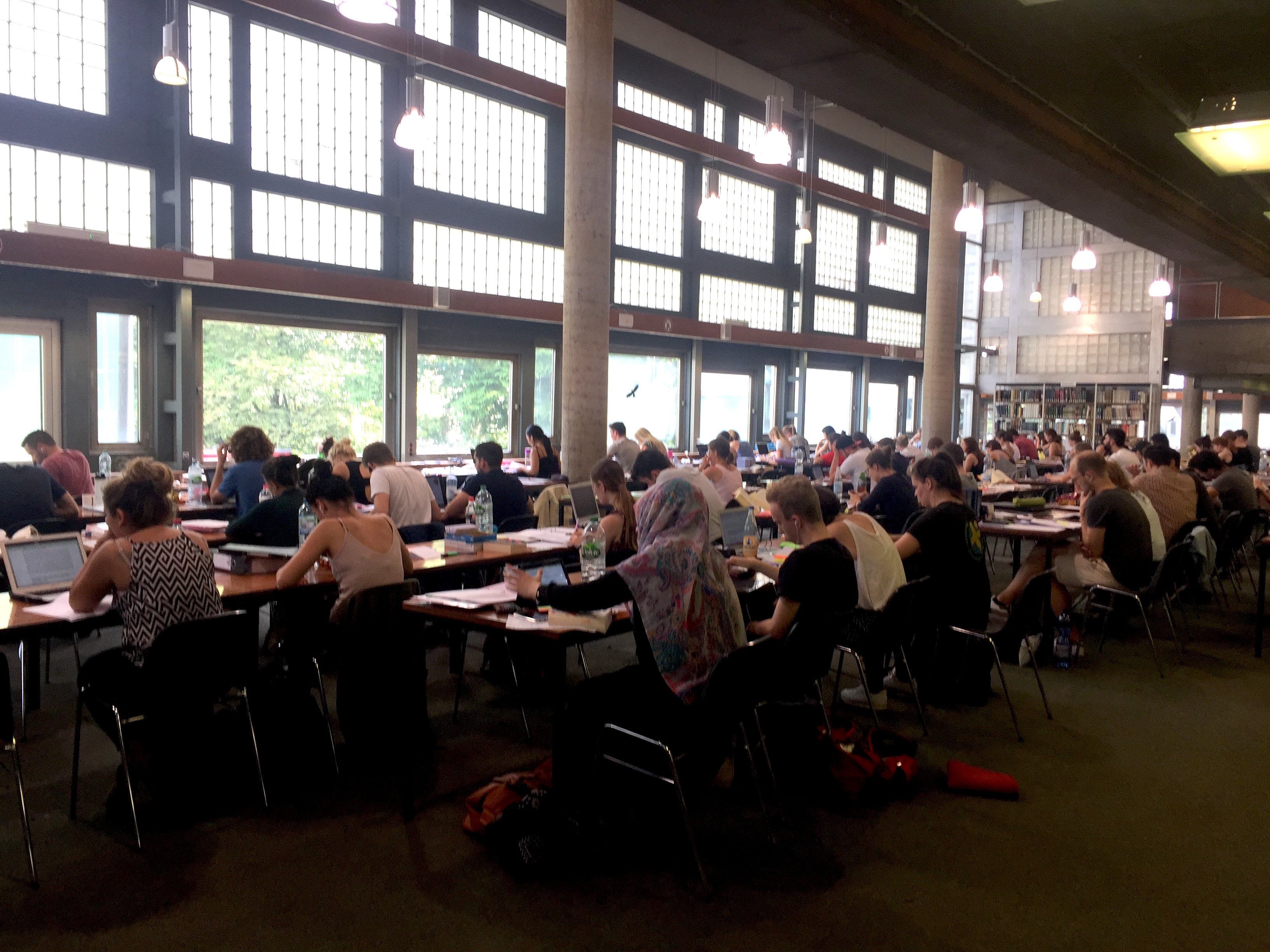
I returned to the library the next day, having built up my confidence. I strode right up to the second floor, along with what felt like a herd of other students, and sat myself down in a free seat at a table already occupied by another student. A small feat, but it felt important to me. Navigating that space forced me to confront the rigid individualism that is so ingrained within me as an American. It made me more conscious of the extent to which we value privacy in the U.S., and how that continues to alienate us from each other. Working at the communal tables at the library made the act of studying feel like an act of mutual support. I felt a sense of solidarity with the other students that I have never found at Carleton’s library, even during finals when the library is filled to capacity. But, that might have just been me, as a newcomer to this idea of communal seating in libraries.
What I find so fascinating about the prevalence of shared seating in Germany is the potential it holds for strengthening the social structure of the country. With communal seating at a restaurant, there is no expectation that you converse with your table-mates, but the possibility is there. It is this possibility of creating new connections that I find so interesting. There is something so optimistic about encouraging people to be in physical proximity because of the potential it holds to eventually create stronger social networks. This is not to say that communal spaces are necessarily part of some sort of greater nationalist project. However, the way in which these spaces are deeply engrained within German society could be seen as a tool for fortifying the country’s social fabric. This idea of shared space opens up larger conversations about the notion of the commons and the importance of public spaces, especially in urban areas, that are beyond the scope of this blog post.
Overall, being in a country that values communal spaces to such an extent has been genuinely refreshing. They create a sense of community that has made me feel more included in a foreign country. More importantly, being forced outside of my bubble of individualism has encouraged me to think more consciously about the power of individual connections and the ways in which we strengthen social networks on national scales.
Juliette!!
I think your post is really nice– I think that it’s the small things in a different place that really do tell us a lot about the culture as a whole. Something I was thinking about while reading your post was a story I had heard from my aunt who was living in France at the time. She said she had been friends with a woman whose son went to preschool with my cousin for a long time, maybe six months, before she learned what this woman did for a living. She said it was just rude for French people to ask one another what they do for a living–whereas it’s the second question after “what’s your name?” when we Americans meet a new person! So while Germany–and Europe, more generally–might have a different concept of personal space (which I struggle with too as an American!) I think their notions of privacy go further in certain areas. Anyway, great post!! 🙂