This past weekend, three of my fellow students and I were able to take a two day trip to Rome by bus. 20 waking hours in one of the most important cultural centers of the Western world was a daunting task, so, in order to cope and see as much as possible, I went into full tourist mode. When functioning so completely as a temporary traveler, the wonder of seeing “the sights” becomes conflated with the immediate pleasure of checking one more sight off of you list. The logistical challenge of packing as much into a single day as possible becomes part of the game, and soon “winning” devolves from a constructive intellectual experience with monumental architecture to staying on schedule. We’ve all been there, and it is a natural part of a tourist’s life.
What is more, most (if not all) of these cultural sights are managed in order to process the frenetic timetables of a family vacation, further compounding the problem. Whether it is the Colosseum, the Forum, or the Pantheon, experiencing the cultural heritage of Rome has become highly dependent on an efficient, modern process of bodily logistics (think online ticket sales, slick security checkpoints, opaque bureaucratic rules). One simply gets swept through experience, chewed up and spat out by an experience machine run with ruthless efficiency. Once again, for any tourist, this isn’t new.
These observations are neither novel nor specific, but they form an important context within which sits my favorite cultural sight in Rome: The Capuchin Crypt, better know informally as the Bone Church of Rome. The Capuchin Crypt is a series of five small rooms housed in the church of Santa Maria della Concezione dei Cappuccini that were decorated over the course of 200 years with the bones of the friars who had lived and died in the church during that time. Skulls, pelvises, femurs, spinal chords, and a vast array of other bones were taken from hundreds of decomposed corpses in order to decorate the crypt (images below).
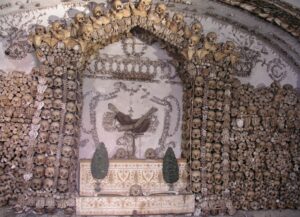

(Capuchin Crypt in the church of Santa Maria della Concezione dei Cappuccini, images from WikiMedia Commons)
As you can see in the images, the bones of these friars are used in a variety of decorative modes. Some skeletons are kept whole and dressed in the friars’ traditional robes, while the vast majority of bones have been dissociated from their bodily context and used solely as decorative implements. Skulls have been stacked into piles, pelvic bones have been layered on top of each other to create a fanning effect, and many smaller bones have been nailed to wall in decorative configurations and patterns. The variety of ways in which these bones have been used it total and complete.
Personally, witnessing these rooms filled with the bones of the devote was an intensely meditative experience. I am not a religious person, but a complete faith by these friars in the everlasting spirit was profoundly evident. What could be grotesque or macabre, was, instead, a brutally honest meditation on belief and role of the physical body in our lives. The Capuchin order had such a resolute belief that their souls would live on through their Christian God that physical death because deemphasized. For them, the miracle of our design could be separated from any fear of death through their devotion to God, allowing for such a presentation.
Standing in the the crypt, I was able to confront rather deep seeded fears and insecurities about my own mortality and role in the world. Gregorian chants were playing, everyone was silent, and I had the opportunity to finally stop, meditate, and engage with ideas and culture for the first time that trip. And then the illusion began to melt away.
As a moved through the crypt from one room to the next, I became further and further removed from the experience. The Gregorian chants that first seemed to profoundly ritualistic, I realized, were simply playing out of crappy speakers in the corner of each room. The silence transformed from meditative and peaceful to forced as more and more children and teenagers entered the crypt to gawk at the dead bodies before them. Worst of all, the further one progresses through the crypt, the closer one gets to the bookshop, meaning that any moment of personal reflection was immediately punctuated by the chime of a cash register. It is at that moment you remember the admissions fee to the building (12 euro), the nice cashier who hand-wrote the recipe you asked for, and the rather self-indulgent Capuchin history museum you had to walk through to get to the crypt in the first place.
The Capuchin Crypt is a part of the tourism industry, just like any other cultural sight in Rome. That may seem obvious or seem like a redundant conclusion considering the introduction to this blog post, but it was shocking in the moment. It is naive, but these profound cultural experiences felt soiled by the presence of money, modernity, and tourism, all institutions that I am more than complicit in.
I was constantly reminded of the Biblical story of Jesus and the merchants of the temple during this trip. This is the scene in the New Testament where Jesus enters the Jewish Temple in Jerusalem during Passover and drives the merchants from it, accusing them of dishonesty and of turning his Father’s house into a den of thieves. In this regard, I fear we are destined to repeat our mistakes.
It wasn’t the most brilliant comment the first time I typed it. I was not abel to read the anti-spam word correctly. Here goes again.
I do not mind talking about death, my grandparents would talk about it at the dining room table. However, a church decorated in skulls, I am not sure I would want to attend that church weekly. I guess decorating in skulls and bones is one way to make these Catholic brothers live on, in memory anyway.
This makes me think of catacombs. I don’t know where they are, but perhaps Rome. There were underground [tunnels or catacombs? or tombs] in which the early early Christians met to pray and do other Christian things. They were hiding their religious services and invented things like the symbol of the fish to stand for Christians. Besides calling themselves Christians, they called themselves “the way.” Anyway, you can see evidence of early Christianity in Rome, what with the coliseum where Christians were tortured by lions, fought each other, etc. Christians were a fringe group.